


Androgenic Alopecia Hong Kong: Causes Signs and Treatment Options
Androgenic alopecia in Hong Kong is the most common cause of hair loss in both men and women. It is a slow and inherited form of pattern hair loss that doctors also call androgenetic alopecia or AGA hair loss. This guide explains the main hair loss causes and shows you how to spot the early signs. It also covers how a hair loss diagnosis is made and which treatment options a doctor may discuss with you.
The condition is not dangerous but it does progress. Early assessment matters because more options remain while your follicles are still active.
What Is Androgenic
Alopecia?
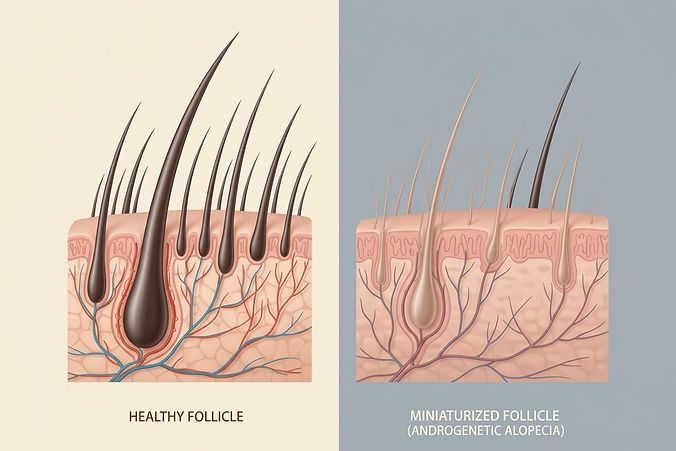
Androgenic alopecia is hair loss in people whose hair follicles are sensitive to androgen hormones. Over time the affected follicles shrink. Each growth cycle becomes shorter and each new hair grows back finer and shorter than the one before. Doctors call this process follicle miniaturisation.
In men the condition is known as male pattern baldness. In women it is called female pattern hair loss. The cause is shared but the pattern on the scalp is different. Both forms develop over years and neither one leaves scars on the scalp.
How Common Is Androgenic Alopecia in Hong Kong?
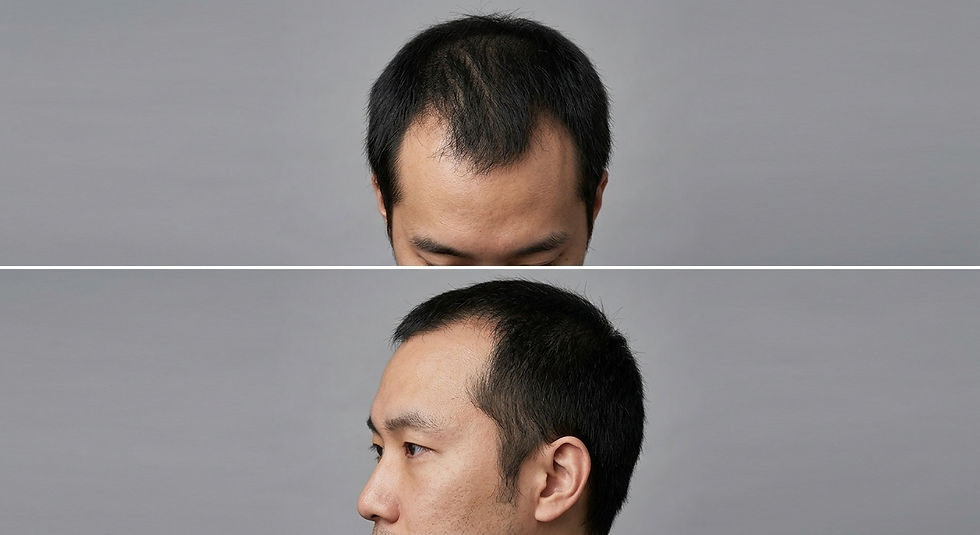
A community study across six Chinese cities found the condition in 21.3% of men and 6.0% of women. The rate rises with age. That makes androgenic alopecia in Hong Kong a common reason for people to ask a doctor about thinning hair.
Some people notice the first changes in their twenties or thirties. Many wait a long time before they seek advice. By then some follicles may no longer respond to treatment.
What Causes Androgenic Alopecia?
Stress and poor sleep do not cause androgenic alopecia. Low iron and scalp inflammation do not cause it either. These factors can trigger extra shedding on top of it and make thinning look worse. Hats and frequent washing and hair gel are common myths. None of them causes pattern hair loss. Three factors work together.
Genetics
The tendency is inherited and it can come from either side of the family. Close relatives with pattern hair loss raise your own risk.
DHT
An enzyme called 5 alpha reductase turns testosterone into dihydrotestosterone (DHT). In sensitive follicles DHT shortens the growth phase and drives miniaturisation.
Age
Follicles become more affected as the years pass. Thinning that starts early tends to progress further.
Early Signs of Male Pattern Baldness
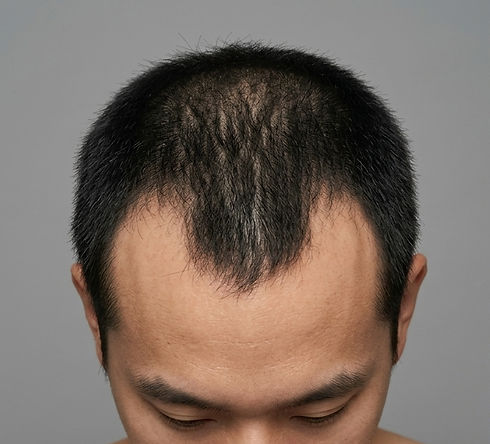
Doctors grade the pattern in men with the Norwood scale. Stage 1 shows little or no recession. Stage 7 leaves only a band of hair around the sides and back. Knowing your stage helps a doctor plan treatment and track change over time.
The condition develops slowly so the early changes are easy to miss. Look for these signs.
01
A receding hairline at the temples
02
An M shaped hairline as the temples move back
03
A thinning crown or a small bald spot at the top of the head
04
Finer and shorter hairs at the front while the sides and back stay thick

Androgenic Alopecia in Women
Doctors grade it with the Ludwig scale. Hormonal changes after childbirth and around menopause can make the thinning more visible. Women with sudden or heavy shedding should also be checked for thyroid and iron problems. Read more on our Female Pattern Hair Loss page.Androgenic alopecia in Hong Kong affects women too. Female pattern hair loss rarely causes a receding hairline. It usually shows up in these ways.
01
A widening part line
02
Less volume over the top of the scal
03
A thinner ponytail
How a Hair Loss Diagnosis Is Made
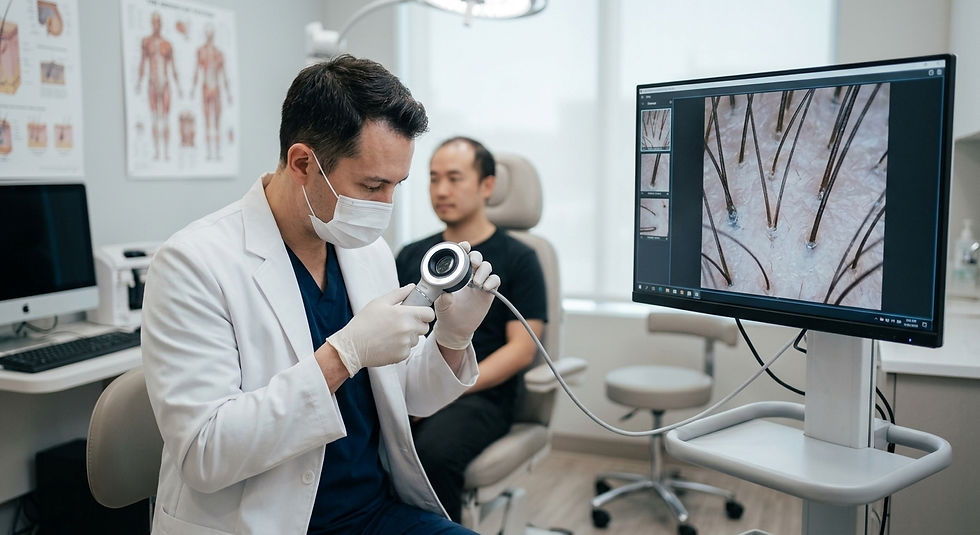
A diagnosis of androgenic alopecia in Hong Kong does not need invasive tests in most cases. The Clinical Scalp and Follicle Assessment at STRAND+ follows four steps.
The result shows your stage and whether your follicles are still active. Those two facts decide which options are worth your time and money.
History
When the thinning started and how it has changed. Family history and medication and stress and diet are also reviewed.
Scalp examination
The pattern of loss across the hairline and temples and part line and crown.
Magnified follicle imaging
A close look at hair shaft thickness. A mix of thick and fine hairs in one area is the hallmark of miniaturisation
Further checks where needed
A doctor may suggest blood tests if another cause is suspected.

Androgenic Alopecia Hong Kong:
Treatment Options


Clinic treatments
Hair mesotherapy
Exosome hair treatment
STRAND+ offers treatments without surgery that are designed to support the scalp and the follicle environment. These treatments may be combined with medication. Your doctor will explain what the evidence shows for each one.
Small injections deliver ingredients such as PDRN and peptides and amino acids to the follicle zone.
Microneedle RF scalp conditioning
Fine needles and controlled heat condition the scalp and help active ingredients reach the follicle.
A solution rich in cell signalling molecules is delivered into the scalp. Research is still developing and early studies suggest it may support follicle activity.
Other Things Worth Knowing

01
Low level laser therapy
Some clinics and home devices use red light to stimulate follicles. Studies show modest benefit for some people. It is usually an addition to other treatment and not a replacement.

02
Hair transplant
When follicles in an area are no longer active no medicine or injection can bring them back. A hair transplant may then be the suitable choice. STRAND+ does not perform transplant surgery and will tell you if a surgical opinion makes more sense for you.

03
Daily habits
Good sleep and enough protein and iron will not reverse the condition. A clean and calm scalp will not reverse it either. These habits help you keep the hair you have and get more from any hair loss treatment in Hong Kong.
Cost of Treating Androgenic Alopecia in Hong Kong
Cost depends on your stage and on the plan your doctor recommends. Medication is usually the lowest monthly cost. Clinic treatments are priced per session or as a course.
When to Book a Scalp Assessment in Hong Kong
Book a visit if you notice any of these changes for more than a few months.
It may be considered for:
-
Your hairline is moving back or your part line is getting wider
-
You can see more scalp at the crown
-
Hairs at the front look finer than hairs at the back
-
Close family members have pattern hair loss and you want to act early

Why Choose STRAND+
STRAND+ manages androgenic alopecia in Hong Kong with a clear process. Every plan starts with assessment and not with a product. Doctors review your stage and your follicle activity before they suggest any treatment.
Progress is tracked with repeat imaging so the plan can change when it needs to.
Get a clear answer on androgenic alopecia in Hong Kong with a Clinical Scalp and Follicle Assessment at STRAND+.